Mobile apps
Mobile App Developers in Zimbabwe
Are you looking for a mobile app developer who can help you create a custom app that meets your specific needs? Look no further! We are a team of experienced and skilled mobile app developers who can help you bring your app idea to life.
Overview
Apps people keep on their phones.
A good app solves one problem well, loads fast on a mid-range Android phone and keeps working when the connection drops. We design and build apps like that for start-ups and established businesses in Zimbabwe and across the region.
We build with Flutter, so one codebase runs natively on Android and iOS. That keeps cost down and lets you launch on both stores. Our recent work includes KweseGo, a rider app and a driver app for the Home Drive ride-hailing service.
What we build
- On-demand and ride-hailingTaxi, delivery and booking apps with live tracking and in-app payments.
- Fintech and bankingMobile banking, wallets, lending and savings apps.
- E-commerce and marketplacesShopping apps with catalogues, carts, mobile money checkout and order tracking.
- Business and staff appsField sales, inspections, attendance and internal tools.
Features
What we include in every app
Android and iOS from one codebase
Flutter apps that feel native on both platforms and share one codebase.
Local payments
EcoCash, InnBucks, cards and wallets built into the checkout.
Push notifications
Timely updates and re-engagement with Firebase Cloud Messaging.
Maps and location
Live tracking, geofencing and address search with Google Maps.
Secure logins
Phone number OTP, social login and biometric sign-in.
Admin panel and API
A backend and dashboard to manage users, content, orders and reports.
How we work
From idea to launch in four steps
Shape the idea
We define the users, the core features for version one and how the app will make money.
Design
Clickable designs you can test on your own phone before development starts.
Develop and test
Flutter apps and a backend API, tested on real devices and networks.
Launch and maintain
Google Play and App Store release, monitoring, updates and new features.
Proof
Apps and platforms we have built
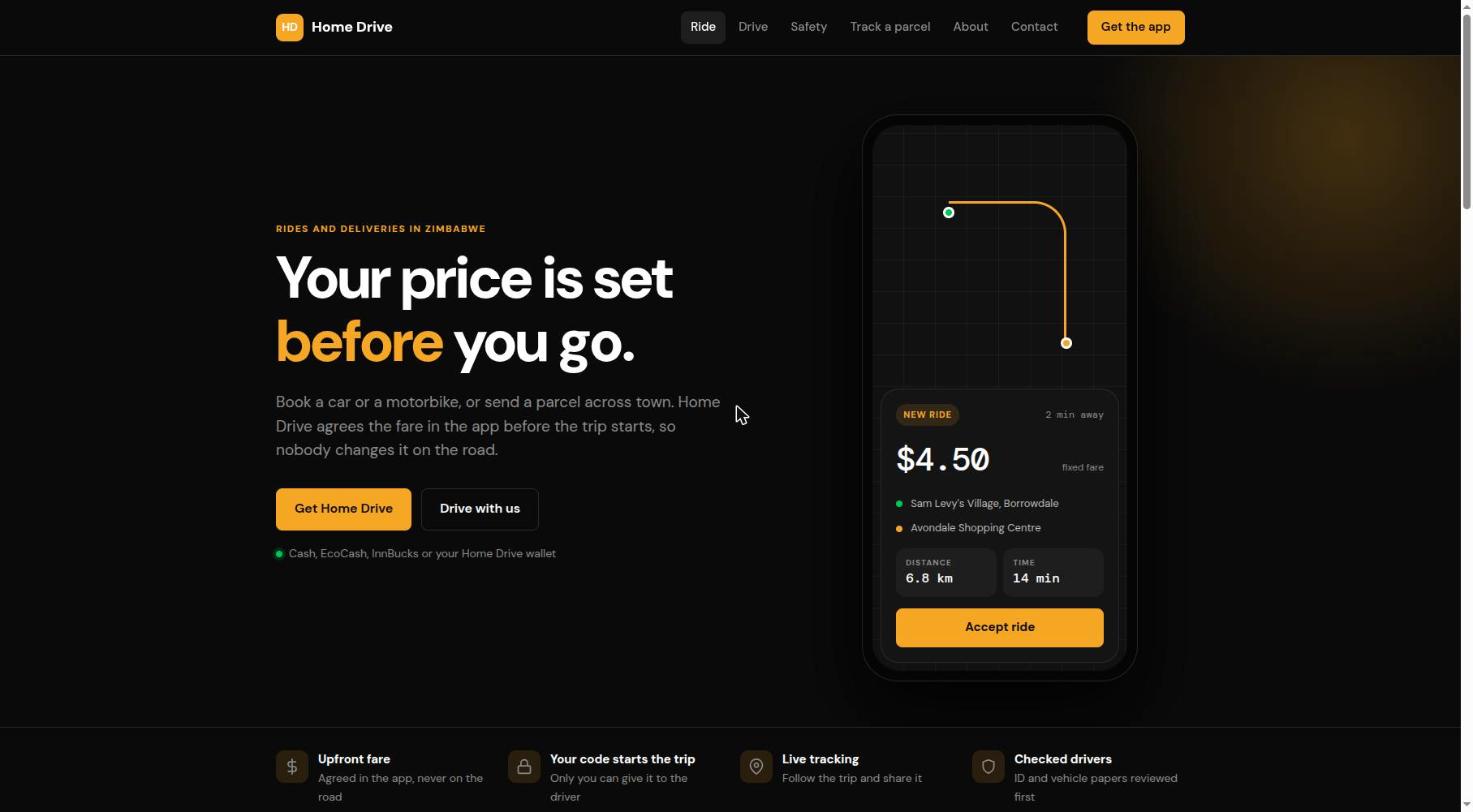
KweseGo (Home Drive)
A ride-hailing and parcel delivery platform for Zimbabwe, with rider and driver apps, fares agreed before the trip, and EcoCash and InnBucks payments.
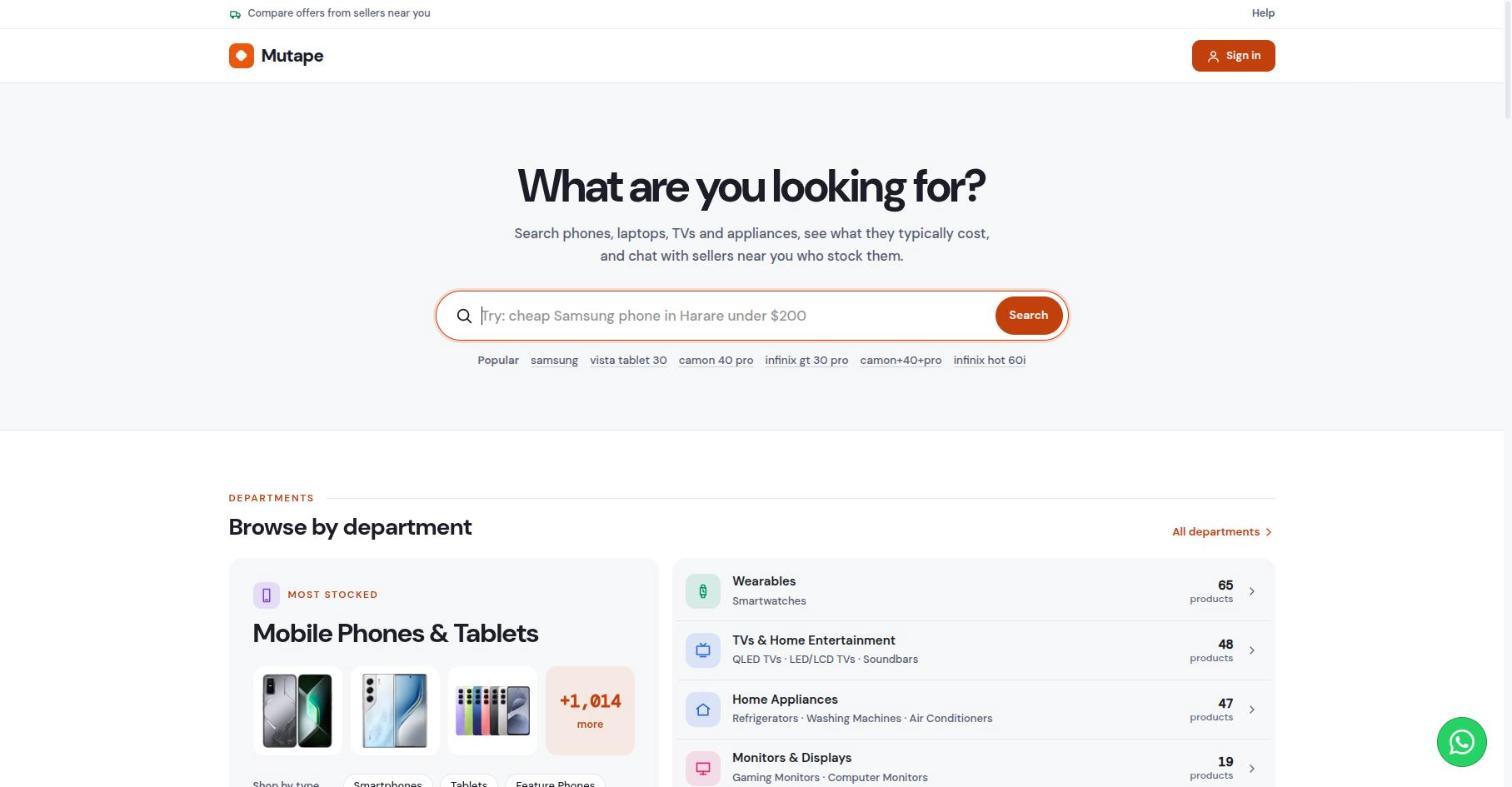
Mutape
Mutape helps people search phones, laptops, TVs and appliances, see what they typically cost, and chat with sellers near them who stock them.
How much does it cost to build an app in Zimbabwe?
App costs depend on the number of features, the platforms you launch on, and whether you need a backend and admin panel. A focused first version with the essentials costs much less than a large app with every feature. We help you decide what to launch first and send a clear quote and timeline.
Why Flutter?
Flutter is Google’s framework for building native apps for Android and iOS from one codebase. It gives smooth performance on mid-range phones, a consistent design on both platforms and faster development, which means lower cost for you.
Technology we use
What are the three main types of mobile apps we can build for you?
When choosing a mobile app, it is important to consider the type of app that you need and the features and functionality that are important to you.
If you need an app that is fast, responsive and has access to all the features and functionality of the device, then a native app is the best choice.
If you need an app that is cross-platform compatible and less expensive to develop, then a web app or hybrid app may be a better option.
Native apps
Native mobile apps are applications developed specifically for a particular mobile operating system (OS), such as iOS (Apple) or Android (Google).
Hybrid apps
Hybrid apps are mobile applications that combine elements of both native apps and web applications. They are developed using web technologies which allows them to run on different platforms, such as iOS and Android.
Web apps
Web apps are essentially websites that have been optimized for mobile devices.
GET IN TOUCH
Do you want a service?
Cross-platform mobile application developers: Harare
Cross-platform mobile applications are applications that can be developed and deployed on multiple mobile operating systems, such as iOS and Android.
This is in contrast to native applications, which are developed specifically for a single mobile operating system.
There are several different cross-platform mobile development frameworks available, such as Flutter, React Native, and Xamarin.
These frameworks allow developers to write code once and deploy it to multiple mobile platforms, which can save time and money
Advantages of cross platform mobile apps
- Cost savings – Cross-platform mobile applications can save developers time and money, as they only need to write and maintain a single codebase.
- Faster development – Cross-platform mobile applications can be developed more quickly than native applications, as developers do not need to learn and master multiple programming languages and development environments.
- Wider reach – Cross-platform mobile applications can be deployed to a wider range of devices and operating systems than native applications.
Disadvantages of cross platform mobile apps
- Low performance – Cross-platform mobile applications may not perform as well as native applications, as they are not written specifically for the target platform.
- Missing features and functionality-Cross-platform mobile applications may not have access to all of the features and functionality of the target platform.
- Development complexity – Cross-platform mobile development can be more complex than native mobile development, as developers need to be familiar with the cross-platform framework they are using.
Native mobile application developers in Zimbabwe
Native applications are applications that are specifically developed for a single mobile operating system, such as iOS or Android.
They are written in the programming language of the platform they are targeting, and they have access to all of the features and functionality of the device.
Native apps are typically the fastest and most responsive type of mobile app, and they offer the best user experience.
Advantages of native mobile apps
- Performance – Native applications are typically the fastest and most responsive type of mobile app, as they are written specifically for the platform they are targeting.
- Features and functionality – Native applications have access to all of the features and functionality of the device, such as the camera, GPS, and accelerometer. This allows developers to create more powerful and engaging applications. Native applications have access to all of the features and functionality of the device, such as the camera, GPS, and accelerometer. This allows developers to create more powerful and engaging applications.
- User experience – Native applications typically offer the best user experience, as they are designed to look and feel like they are part of the operating system.
Disadvantages of native mobile apps
- Cost – Native applications can be more expensive to develop than web apps or hybrid apps, as developers need to learn and master the programming language and development environment of the target platform.
- Development time – Native applications can take longer to develop than web apps or hybrid apps, as developers need to write and maintain separate codebases for each platform they want to target.
- Reach – Native applications can only be deployed to a single mobile operating system, which limits their reach.
Top iOS application developers in Zimbabwe
iOS mobile apps are applications that are developed specifically for the iOS operating system, which is used on iPhones, iPads, and iPod touch. iOS apps are written in the Swift or Objective-C programming language, and they are distributed through the App Store.
iOS apps are known for their high quality, user-friendly design, and powerful features. Some of the most popular iOS apps include:
- Games – Angry Birds, Temple Run, Clash of Clans, Candy Crush Saga, Minecraft
- Productivity – Microsoft Office, Google Docs, Evernote, Slack, Dropbox
- Social media – Facebook, Instagram, Twitter, Snapchat, TikTok
- Entertainment – Netflix, Hulu, Amazon Prime Video, Spotify, Apple Music
- Entertainment – Netflix, Hulu, Amazon Prime Video, Spotify, Apple Music
- Utilities – Google Maps, Waze, Flashlight, Camera+, Weather Underground
OS apps can be used for a variety of purposes, including entertainment, productivity, communication, and education. They can also be used to control smart home devices, manage finances, and track fitness goals.
Advantages of iOS Apps
- High quality – iOS apps are typically of high quality, due to Apple’s strict app review process.
- User-friendly design – iOS apps are known for their user-friendly design. They are easy to navigate and use, even for beginners.
- Powerful features – iOS apps can access all of the features of the iOS operating system, such as the camera, GPS, and accelerometer. This allows developers to create more powerful and engaging applications.
- Security – iOS apps are generally more secure than Android apps. This is because Apple has a strong focus on security and privacy.
How a mobile app can help your business grow
Increased brand awareness
A mobile app can help businesses increase brand awareness by putting their brand directly in the hands of their customers.
When customers use a business’s mobile app, they are constantly exposed to the brand’s logo, colours, and messaging.
Improved user engagement
A mobile app can help businesses improve customer engagement by providing customers with a convenient and easy way to interact with the business.
For example, customers can use a mobile app to browse products, make purchases, view their order status, and contact customer support.
Increased sales
A mobile app can help businesses increase sales by making it easier for customers to buy products and services.
For example, customers can use a mobile app to make impulse purchases, shop for products while on the go, and use mobile payments to check out quickly and easily.
Improved customer loyalty
A mobile app can help businesses to improve customer loyalty by providing customers with a personalized experience.
For example, businesses can use mobile apps to track customer preferences, offer personalized recommendations, and reward customers for their loyalty.
Reduced costs
A mobile app can help businesses to reduce costs by automating tasks, improving efficiency, and reducing paper waste.
For example, businesses can use mobile apps to take orders, process payments, and send digital receipts.
More convenient for the users/customers
Mobile apps are generally more convenient for users.
Frequently Asked Questions
Mobile app development prices range from US$ 800 to US$ 1200 in Zimbabwe. However, there are many factors which determine the prices of building a mobile app in Zimbabwe. The price of building a mobile application can vary depending on a number of factors, including:
➤ The complexity of the app – More complex apps with more features and functionality will typically cost more to build.
➤ The platform(s) the app is being developed for – Developing an app for multiple platforms will typically cost more than developing an app for a single platform.
➤ The experience and expertise of the development team– More experienced and reputable development teams will typically charge higher rates.
➤ The location of the development team – Development teams in countries with a high cost of living will typically charge higher rates than development teams in countries with a lower cost of living.
The amount of time it takes to build an app in Zimbabwe can vary depending on a number of factors, including the size and complexity of the app, the features and functionality required, and the experience and expertise of the development team. However, in general, you can expect it to take anywhere from 10 hours to 200 hours to build a simple app, and anywhere from 200 hours to 1000 hours to build a more complex app. Below are the factors which can affect the amount of time it takes to build an app:
➤ Size and complexity of the app – Larger and more complex apps will typically take longer to build. This is because they require more time and effort to design, develop, and test.
➤ Features and functionality required – The more features and functionality you require on your app, the longer it will take to build. This is because each feature will need to be designed, developed, and integrated into the app.
➤ Experience and expertise of the development team– More experienced and reputable development teams can typically build apps faster. This is because they have the skills and expertise to streamline the development process.
If you are on a tight deadline, you can try to shorten the amount of time it takes to build your app by choosing a simple design, using a free or low-cost content management system (CMS), and doing some of the work yourself, such as writing your own content and adding your own images and videos.
FAQ
Frequently asked questions
Do you build apps for both Android and iOS?
Yes. We build with Flutter, so one codebase runs on Android and iOS, and we handle both store releases.
Can you publish my app on Google Play and the App Store?
Yes. We prepare store listings, screenshots and privacy details, and guide you through developer accounts and review.
Can my app accept EcoCash?
Yes. We integrate EcoCash, InnBucks, OneMoney and card payments, usually through Paynow.
Do you maintain apps after launch?
Yes. We offer ongoing maintenance, monitoring, Android and iOS updates and new features.
Related services